
Bringing Care to the Community: Radiology's Expanding Role in Advancing Health Equity
How radiologists are reshaping access, equity and community through patient-centered partnerships and innovative care models

Radiology plays a central role in screening, diagnosis and treatment, yet many patients still face significant barriers in accessing imaging services worldwide. A RadioGraphics paper authored by radiologists from across the United States brings this reality into sharp focus.
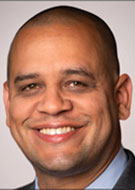
“Our role in radiology is focused on improving health outcomes for every patient. To achieve this goal and transform our patient’s care journey, we need to form successful partnerships with patients and their communities,” said Efrén J. Flores, MD, an associate professor in thoracic imaging at Harvard Medical School and vice chair of faculty and trainee enrichment for Massachusetts General Brigham (MGB) Radiology in Boston.
He is the founding director of the MGB Radiology Inclusion & Systemic Equity (RISE) Center and the recipient of the RSNA 2025 Outstanding Community Impact Award.
“Established health equity and community-based research frameworks can be adapted in collaboration with patients and their communities to guide community-focused radiology programs that improve access, reduce disparities and support radiologist well-being,” Dr. Flores said.
Rather than starting from scratch with community engagement, Dr Flores and his colleagues recommend leveraging existing foundations that can be adapted across different radiology practice settings. In this article, Somiah Almeky, MD, Dr. Flores and their coauthors present several radiology programs used nationally.
“Widely used health equity frameworks, such as the socioecological model and the National Institute on Minority Health and Health Disparities (NIMHD) research framework, can be translated into the language and workflows of radiology,” Dr. Flores said. “These models recognize that health outcomes are shaped by a complex combination of factors at the individual, community, health systems and policy levels.”
According to Dr. Flores, when radiologists apply a lens of empathy to imaging, it provides a different perspective into common issues faced in radiology practices globally.
“A missed screening mammogram or lung cancer screening is not just a patient ‘no-show,’” he said. “Through an empathy lens, we may reflect on how this missed appointment may be due to lack of childcare, unreliable public transportation, limited time off from work, or lack of trust of an unfamiliar health system.”
Similarly, a delayed follow-up CT might be traced to insurance complications, language barriers or the absence of a trusted navigator.
By grounding their work in these frameworks, the researchers argue that radiology teams can design programs that respond to real structural barriers instead of treating them as background noise.

Radiology’s Changing Relationship with Patients
Community engagement has traditionally been seen as the domain of public health or primary care. Radiology was often perceived as a specialty practiced away from patients. According to Cecelia Brewington, MD, that perception no longer fits.
Dr. Brewington is the system chair and professor of radiology at Ochsner Health in New Orleans and coauthor of an invited commentary accompanying the RadioGraphics article.
She notes that the expansion of screening initiatives and the widespread adoption of minimally invasive procedures have progressively positioned radiology as a more patient-facing specialty.
“The health care community has become more dependent on the valuable information provided by diagnostic and procedural radiology for patient appropriate care,” she said.
Dr. Brewington has long been an advocate for equity in health care. “I am acutely aware of the value added by our profession in the space of ‘prevention and early diagnosis’ in population health care along with the potential impact to correcting disparity in health care that our profession can achieve,” she said.
At the same time, Dr. Brewington points to barriers that obscure the scope and extent of patient care happens outside the exam room or procedure suite. Radiology’s historic identity as a less patient-facing specialty lingers in how colleagues and patients perceive the professional practice of radiology. She explained that these longstanding perceptions continue to shape the daily realities of radiology practice, influencing how radiologists balance patient needs with institutional demands.
“Productivity expectations keep many radiologists tethered to workstations, while reimbursement models often do not recognize time spent discussing findings in multidisciplinary conferences or building community programs,” Dr. Brewington said.
Addressing those barriers, she suggests, is essential to recognizing the full scope of radiologists’ responsibilities and plays a pivotal role in unlocking radiology’s full potential in community engagement.

A Radiology-Specific Model for Community Engagement
One of the central contributions of the article by Dr. Flores and his colleagues is the development of a radiology-centric community engagement model and several case studies.
“The model emphasizes coalition-building between radiologists, community organizations, primary care clinics, advocacy groups and patients,” Dr. Flores said. “It also focuses on sustained relationships with communities that experience barriers to care; and outreach in trusted settings—from churches and barber shops to libraries, community centers and radiology waiting rooms.”
Capacity building and using evidence-based data to track outcomes and continuously refine interventions are defining features of this model. Rather than relying on short-term projects, it calls for building sustainable programs aligned with institutional priorities. These efforts focus on training radiologists, community health workers, and local referring clinicians to partner effectively with patients and their communities and improve health outcomes for all.
Dr. Flores and his coauthors note that education is the final pillar. “It’s critical to embed health equity, cultural humility and communication skills into radiology residency curricula and continuing education so that engagement becomes part of our radiology professional identity,” he said.
The model links engagement with radiologist well-being. By creating opportunities for meaningful connection with patients and communities, it offers a counterbalance to the isolation and burnout that many radiologists experience.

What Actual Engagement Looks Like
Dr. Flores and his colleagues offer practical case examples that show how these concepts play out in real programs.
In one case, lung cancer screening (LCS) eligibility assessments were integrated into existing imaging visits. These were used as natural opportunities to educate patients while they are already in the radiology department for another reason. These patients were asked a brief set of questions during the visit.
Importantly, for those who qualified, the follow-up education, navigation support and shared decision making all happened during that same visit, without requiring them to schedule separate appointments.
For patients juggling multiple jobs, caregiving responsibilities and long travel times, care coordination of multiple steps and radiology encounters into a single visit can significantly reduce barriers to radiology care.
Other examples include:
- Mobile mammography services deployed to rural and urban neighborhoods without nearby imaging facilities.
- Telehealth-supported imaging programs that connect remote clinics with subspecialty radiologists
- Community-informed redesigns of imaging spaces that make them more welcoming for patients with prior negative experiences.
Resident-led initiatives, such as the Communities Crushing Cancer program—a national patient outreach effort developed by the Radiology Health Equity Coalition (RHEC)—bring cancer screening patient education into hospitals, community centers and health fairs, allowing trainees to learn engagement skills early in their careers.
“Taken together, these cases illustrate how community engagement in radiology provides an opportunity to adapt existing frameworks into impactful programs in radiology. Radiology’s next evolution will leverage the community-to-individual health continuum to improve health outcomes for every patient.” Dr. Flores said.
For More Information
Access the RadioGraphics article, “The Role of Radiology in Community Engagement,” and the related commentary, “Additional Perspectives on Community Engagement and Health Equity in Radiology.”
Access RSNA’s radiology health equity resources.
Read previous stories on health equity:
Experiences On a Hospital Boat in the Amazon
When access to health care depends as much on geography as technology, the role of radiology becomes both more complex and more consequential.
Read about the experiences of Jose Araujo-Filho, MD, PhD, a radiologist at Hospital Sírio-Libanês and Grupo Fleury in São Paulo, Brazil, and member of the RSNA Committee for Latin America, who joined a medical expedition to the Brazilian Amazon, where access to health care is constrained by geography and scarce resources.