
RSNA R&E Foundation Fuels $4.5 Million in 2026 Research
Funding supports 79 projects addressing critical needs in medical imaging
The R&E Foundation Board of Trustees has approved more than $4.5 million in grants this year to support investigators and educators addressing critical challenges in medical imaging and radiation oncology.
With donor support, the R&E Foundation was able to fund 79 new grants, including a first in Argentina. From earlier detection of disease and more personalized patient care to smarter use of AI and high-impact training for the next generation of radiologists, funded projects reflect radiology’s critical role in state-of-the-art healthcare.
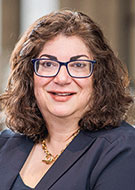
“The R&E Foundation continues to build on our mission of furthering the field of radiology through funding the researchers that advance science and patient care,” said Pamela K. Woodard, MD, chair, R&E Foundation Board of Trustees. “We are thrilled to announce our 2026 grant recipients, and excited to see what discoveries will be made and how their research will evolve the field.”
This year’s grantees are exploring ways to improve care for patients with cancer, heart and vascular disease, neurologic conditions, chronic liver disease, multiple sclerosis, pediatric disorders and other serious health challenges. Many projects focus on making imaging more precise, less burdensome for patients and more useful for physicians making complex decisions.

Advancing Research Across a Range of Diseases
Among this year’s recipients is Yashbir Singh, PhD, of Mayo Clinic in Rochester, New York. Dr. Singh was awarded a Research Scholar Grant for his work to improve early detection and tailored treatment for perihilar cholangiocarcinoma (pCCA), a cancer that forms in the bile ducts outside the liver. Dr. Singh’s approach combines advanced imaging and deep learning technology to identify subtle pre-malignant signs of pCCA that aren’t visible on conventional imaging.
Several other cancer-focused projects aim to improve detection and treatment across the disease spectrum. RSNA Research Fellow Grant recipient Ruoqi Gao, MD, PhD, of the University of Texas Southwestern Medical Center, is investigating how to “reprogram” immune cells to attack aggressive brain tumors.
Faezeh Sodagari, MD, of Case Western Reserve University School of Medicine and University Hospitals Cleveland Medical Center in Ohio, is using her RSNA Research Medical Student Grant to explore a new fast MRI technique that can detect breast cancer in just 5 minutes.
Meanwhile, Nicholas Fong, of the University of California, Davis School of Medicine in Sacramento, is using cardiac CT angiography and environmental data to examine how pollution exposure and socioeconomic status affect early and progressive heart disease. Arman Sharbatdaran, MD, of Weill Cornell Medicine in New York, is exploring the use of whole-body MRI to better understand how GLP-1 weight loss treatments affect body fat and muscle in ways that matter for long-term health. Both are recipients of the RSNA Research Medical Student Grant.
One recipient of the Education Project Award represents the first R&E Foundation-funded project in Argentina. Hernan Chaves, MD, of Fleni Belgrano in Buenos Aires, is using the award to develop an open-source AI-assisted simulator to train new radiologists.
“Projects like these are only made possible due to the generosity of our donors and the time and efforts of our volunteers,” Dr. Woodard said.
Since its inception in 1984, the RSNA R&E Foundation has provided more than $92 million in support for medical imaging investigators and educators.
Applications for most 2027 R&E Foundation grants open in October.
For More Information
View the list of 2026 grant recipients.
Learn more about the R&E Foundation and funding opportunities.