
Course presenters

Amy Alexander, MS
Amy Alexander, MS, is unit head of mechanical development and applied computational engineering within Mayo Clinic’s division of engineering (DOE). In this role, she bridges the medical device development and additive manufacturing capabilities of the DOE with the needs of clinical practice.
Alexander is a frequent co-author of medical 3D printing peer-reviewed papers and long-term reviewer for 3D Printing in Medicine. In 2019, she was recognized as one of 14 international recipients of the Outstanding Young Manufacturing Engineer award from the Society of Manufacturing Engineers (SME).
Alexander holds a bachelor's degree in biomedical engineering and a master's degree in engineering management from the Milwaukee School of Engineering. She also holds certificates in additive manufacturing from MIT and SME. Alexander is past chair of SME's Medical Additive Manufacturing Technical Advisory Team and is a long-standing member of RSNA's 3D Special Interest Group.

David H. Ballard, MD, MS
David H. Ballard, MD, MS, is an abdominal radiologist and assistant professor of radiology at the Mallinckrodt Institute of Radiology–Washington University School of Medicine in St. Louis.
Dr. Ballard is the director of the Mallinckrodt 3D Printing Lab and serves as a reviewer for several journals, including as an associate editor for Radiology and 3D Printing in Medicine. He has authored over 100 publications, with approximately 30 focused on 3D printing. Dr. Ballard has also authored numerous clinical-use documents that delineate the suitable integration of 3D printing in clinical practice.
Dr. Ballard currently serves as vice chair of the RSNA 3D Special Interest Group.

Eric Braden
Eric Braden is the 3D Print Lab Manager at Arkansas Children’s Hospital, where he leads the development and operation of the hospital’s clinical 3D printing service. Since the lab’s founding, he has shaped its growth into a trusted resource for surgical planning and communication, producing models that blend clinical precision with visual clarity. With a background in healthcare simulation and a deep passion for design, innovation, and problem-solving, Eric brings both technical mastery and creative insight to his work. His lifelong connection to art and music informs a unique approach—where engineering meets empathy to support better outcomes for patients and families.
Leonid Chepelev, MD, PhD
Leonid (Leo) Chepelev, MD, PhD, has a background in computational biochemistry. His current research work is primarily focused on advanced visualization, 3D segmentation, semantic web technologies, and the application of machine learning in advancing the appropriateness, role and impact of medical imaging in frontline clinical practice.
In 2011, Dr. Chepelev completed his doctorate in biology with a focus on chemical and biological informatics. In 2015, he earned his medical degree and in 2020, he completed his diagnostic radiology residency at the University of Ottawa. In 2021, he completed his cardiovascular imaging fellowship at Stanford University. After a term at the University of Toronto’s joint department of medical imaging as an assistant professor, clinical radiologist and AI lead, he joined Banner Health as staff physician and as an associate professor at the University of Arizona, Phoenix.
Dr. Chepelev currently serves on the leadership team of the RSNA 3D SIG and is looking forward to the exciting developments in the ever-growing field of computational radiology.
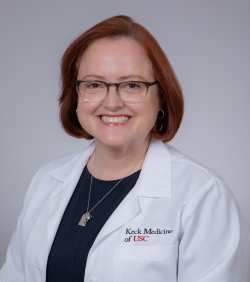
Summer J. Decker, PhD
Summer J. Decker, PhD, is the founding director of the Center for Advanced Visualization Technologies in Medicine (VISTA) at the Keck School of Medicine (KSOM) of the University of Southern California (USC). She is a full professor in the departments of clinical radiology, surgery and pathology at USC’s KSOM and serves as a professor in the USC Viterbi School of Engineering and the USC School of Cinematic Arts.
In 2011, Dr. Decker established and led the University of South Florida Department of Radiology’s clinical 3D printing lab. For her clinical work, she utilizes 3D modeling and printing to create patient-specific models to assist in surgical planning, simulation and education. Dr. Decker’s research focuses on the clinical applications of 3D modeling and printing, the quantitative analysis of medical imaging, and forensic applications of medical imaging.
Dr. Decker serves on the Board of the International Society of Forensic Radiology and Imaging where she is the senior associate editor for the journal Forensic Imaging. She also serves as an associate editor of the journal 3D Printing in Medicine. She holds numerous patents on medical devices developed in her lab. For her work, she has won several humanitarian awards including the U.S. Patent and Technology Office’s 2023 Patents for Humanity Award, the Arthur P. Gold Foundation 2021 National Champions of Healthcare Award, as well as the International FormLabs Impact Award for her work’s impact on humanity and health care through 3D technologies. She currently serves as chair of the RSNA 3D Special Interest Group.
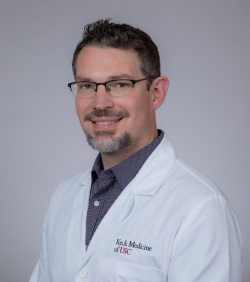
Jonathan M. Ford, PhD
Jonathan M. Ford, PhD, is an associate professor of radiology and the associate director of VISTA at the Keck School of Medicine. With a background in biomedical engineering, Dr. Ford pioneers the use of 3D modeling and printing for patient care, education and research. His work at the intersection of technology and medicine showcases a commitment to advancing health care through innovative applications.

Alyssa Glennon
Alyssa Glennon is the program director and lead engineer of the 3D Collaborative for Medical Innovation at the Yale School of Medicine, where she leads clinical 3D innovation, directs research initiatives, and teaches undergraduate and graduate courses in personalized medicine and applied engineering.
A biomedical engineer trained at Brown University, she has collaborated with many of the world’s leading orthopedic and reconstructive surgeons, contributing to more than 350 patient specific surgical cases and supporting landmark procedures — including the world’s first pediatric bilateral hand transplant, the first autologous elbow-to-elbow transplant, and the world’s first successful combined face and bilateral hand transplant.
Her industry and academic work span the development of novel medical devices, and she has pioneered 3D virtual surgical planning and additive manufacturing workflows that have advanced complex clinical care.
A dedicated educator and mentor, she delivers lecturers at Yale and at national and international conferences and leads outreach workshops to inspire future engineers and clinicians. Through her combined expertise in engineering, clinical translation and workforce development, she is committed to expanding access to 3D technologies and shaping the next generation of medical innovators.

Jonathan M. Morris, MD
Jonathan M. Morris, MD, is a professor in the Departments of Radiology, Otolaryngology, Neurosurgery, and Anatomy at Mayo Clinic. He earned his doctorate from Howard University College of Medicine, followed by an internship at Washington Hospital Center and research fellowships at the National Institutes of Health, National Institute of Neurological Disorders and Stroke, and National Library of Medicine. He completed his radiology and neuroradiology fellowships at Mayo Clinic.
Dr. Morris serves as the medical director of the 3D printing anatomic modeling unit and the center for biomedical and scientific visualization, as well as the executive medical director of immersive and experiential learning at Mayo Clinic. His expertise spans point-of-care manufacturing for digital twinning, preoperative and virtual surgical planning, and the development of patient-specific surgical devices. Clinically, he specializes in minimally invasive thermal ablation of tumors affecting the neuroaxis and musculoskeletal system. With over 270 published articles, multiple books and book chapters, Dr. Morris is regarded as an international authority in his fields and a recognized leader in extended reality (VR/AR/MR).

Jayanthi Parthasarathy, PhD
Jayanthi Parthasarathy, PhD, is the manager of the 3D printing and innovation lab in the Department of Radiology at Nationwide Children’s Hospital in Columbus, Ohio. The lab has supported all the specialties of physicians and researchers within the enterprise for extended visualization and pre-surgical planning and simulation since 2017.
Dr. Parthasarathy is a trained dental and maxillofacial surgeon and has worked in medical applications of 3D printing for more than 20 years. She earned her master’s degree in mechanical and manufacturing engineering in India and doctorate in industrial engineering from the University of Oklahoma, School of Engineering. Dr. Parthasarathy has also worked in the medical device manufacturing industry, providing patient specific models for implantable devices, and has been a contributing member of the RSNA SIG since 2017.
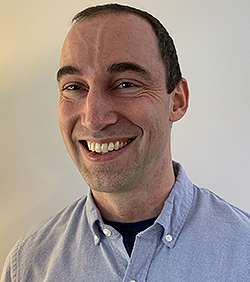
Brian Patterson, MS, MAT
Brian Patterson, MS, MAT, brings a passion for education into the field of medical 3D printing. Currently, Patterson is the program director of the 3D Lab for Geisinger Health in Pennsylvania. In this role, Patterson works to improve patient care, clinical education and communication with patients and their families.
He started his career by earning dual bachelor's degrees in biology and psychology from the University of Maryland, Baltimore County (UMBC). He then completed a Master of Arts in Teaching from UMBC as part of the National Science Foundation Initiative to bring highly qualified math and science teachers into high-needs schools in Baltimore County.
Previously, Patterson was a biology teacher in Baltimore County Public Schools, where he built a program for students interested in biomedical sciences. While teaching, he earned a second master's degree in applied biomedical engineering from Johns Hopkins University.
During his studies, Patterson became interested in the potential of medical 3D printing, and he worked for a small start-up company that produced custom 3D printed prosthetic covers, later evolving into a design and prototype firm.
This combination of skills led to his current position as the program director of the 3D Lab for Geisinger Health.
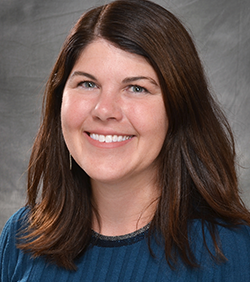
Beth Ripley, MD, PhD
Beth Ripley MD, PhD, is the deputy chief for the Office of Healthcare Innovation and Learning at the Veterans Health Administration (VHA) and is an associate professor of radiology at the University of Washington School of Medicine.
Dr. Ripley is the founding director of the enterprise wide VHA Office of Advanced Manufacturing, whose goal is to provide access to 3D printing services and patient specific health care solutions to all nine million veterans.
Dr. Ripley specializes in translating medical imaging into virtual and 3D-printed models, with the goal of changing the way doctors and patients understand and treat disease. She collaborates across multiple disciplines and has a passion for innovation and human-centered design.
Dr. Ripley served as chair of the VHA 3D Printing Advisory Committee from 2017 to 2021. Awarding her work with 3D printing at the VHA, she received the Samuel J. Heyman Service to America Medal for Science and the Environment in 2020.

Justin Ryan, PhD
Justin Ryan, PhD, is a research scientist at Rady Children’s Hospital–San Diego and is the director of the Helen and Will Webster Foundation 3D Innovations (3DI) Lab. The Webster Foundation 3DI Lab creates patient-specific anatomical models for surgical and procedural planning and conducts research regarding anatomical/morphological variation.
Dr. Ryan earned his doctorate in biomedical engineering in 2015 from Arizona State University and his master’s degree in business administration in 2021 from National University. Dr. Ryan is an active member of the RSNA 3D Special Interest Group, where he currently serves as secretary, and has been active in the development of the American College of Radiology's (ACR) 3D printing registry. He is also a co-chair of the working group DICOM WG-17, which focuses on aligning medical imaging standards with the needs of the 3D community.
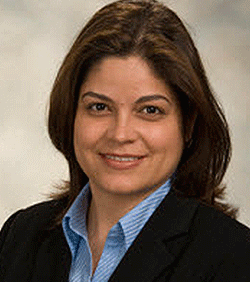
Lumarie Santiago, MD
Lumarie Santiago, MD, is a professor of diagnostic radiology in the department of breast imaging at The University of Texas MD Anderson Cancer Center (MDACC), where she also helped establish and lead the Medical 3D Printing and Advanced Visualization Laboratory. Her interests are novel breast imaging techniques and personalized treatment options, including breast cryoablation and 3D printing.
Dr. Santiago has led research in neoplastic seeding in breast cancer in addition to the impact of 3D printed breast models in the decisional conflict of patients with breast cancer.
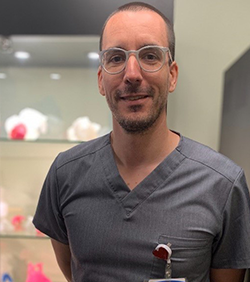
Greg Sturgeon
Greg Sturgeon is a cardiac sonographer at the Duke Children’s Pediatric & Congenital Heart Center in Durham, NC. In addition to his role in clinical echo imaging, Sturgeon is responsible for creating their 3D cardiac anatomical models.
He has been interested in 3D modeling and medical imaging for nearly 20 years and has coded three different marching cubes variants—just for fun.
Before joining the echo lab, Sturgeon worked in a medical physics research lab, where he was involved in image segmentation and geometric modeling. He has published extensively and completed all the coursework towards a doctorate in biomedical engineering but is instead pursuing a career in a more clinical environment.
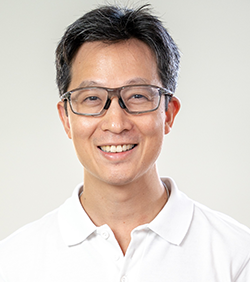
Mark Tan, MD
Mark Tan, MD, is a radiologist and clinical lead of the Singapore General Hospital 3D Printing Centre. Dr. Tan has professional interests in the employment of imaging for the planning, rehearsal and performance of head and neck surgeries, in addition to plastic and reconstructive, neurosurgical, oncological, orthopedic and cardiac surgeries.
Dr. Tan is also interested in designing and producing from medical imaging, patient specific anatomical models for surgical rehearsal and implant sizing, surgical guides for localization and reconstruction, appliances (i.e. orthotics and prosthetics) and non-resorbable and bioresorbable implants for clinical care.
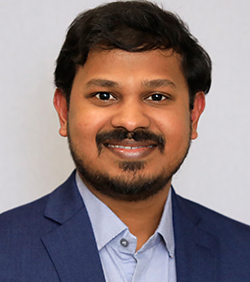
Karthik Tappa, PhD
Karthik Tappa, PhD, is the 3D printing engineer in the MD Anderson Cancer Center’s Anatomic 3D Printing and Visualization Program. As a biomedical engineer specializing in multiple additive manufacturing technologies, he has made significant contributions to medical 3D printing.
Dr. Tappa’s research has been published in numerous biomedical engineering journals, showcasing his innovative approaches to personalized health care solutions. His work has expanded the theoretical understanding of 3D printing applications, translating into tangible advancements in patient care.
With a wealth of knowledge and expertise, Dr. Tappa has actively engaged with both academic and industry professionals. He has collaborated on interdisciplinary projects and fostered partnerships between engineering and medical communities. As a visionary in the field of 3D printing at the point-of-care, Dr. Tappa continues to explore new frontiers. He envisions a future where personalized medicine is enhanced through the seamless integration of engineering innovation.
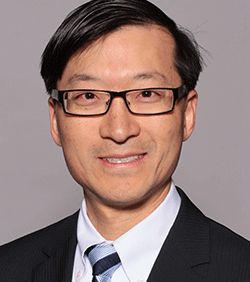
Kenneth C. Wang, MD, PhD
Kenneth C. Wang, MD, PhD is a staff radiologist and MRI section chief at the Baltimore VA Medical Center and is an adjunct associate professor at the University of Maryland School of Medicine.
Dr. Wang completed residency and fellowship training at the Johns Hopkins Hospital, as well as a fellowship in imaging informatics at the University of Maryland. He has worked on standards development with RSNA and the Logical Observation Identifiers Names and Codes database. Dr. Wang’s research interests include ontologies, interoperability, image segmentation, MR neurography, 3D printing, liver imaging and shoulder surgery.
Dr. Wang earned his bachelor’s, master’s and doctorate degrees in electrical engineering from Stanford University and his medical degree from the University of California, San Francisco.
Contact us
For questions, please contact 3DSIG@rsna.org.